
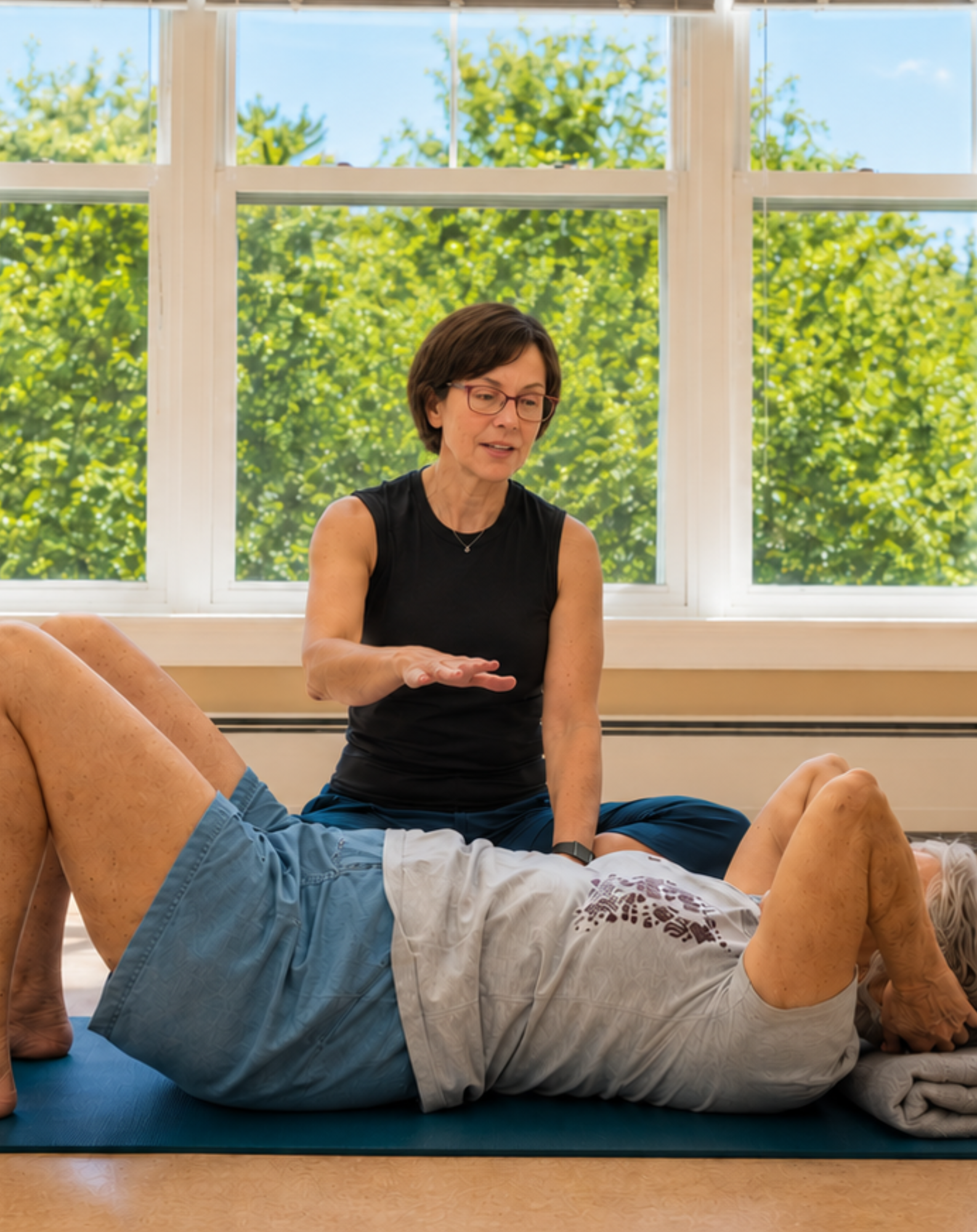
One-on-One Yoga Therapy
Personalized support drawing from the broader tradition of Classical Yoga to help you navigate ongoing health concerns and the changes that accompany aging with greater ease, resilience, and connection to what matters most.
Yoga therapy is…
▲ IndividualizedWe start with you: what you’re dealing with, what matters to you, and what you hope might change.
▲ whole-personHealth concerns and other challenges rarely stay neatly contained in one part of life. Yoga therapy looks at the bigger picture.
▲ collaborativeI bring my training in Yoga, but you’re the expert on your own experience.
What is Yoga Therapy?
Instead of starting with a particular style of yoga or a standard set of poses, yoga therapy starts with you: what you’re dealing with, what matters to you, and what you hope might change. We use tools from Classical Yoga—movement, breathing exercises, mindfulness and meditation, guided relaxation, and even a little yoga wisdom—choosing and adapting what makes sense for you, and leaving aside what doesn’t.
Yoga therapy can work alongside medical care when that’s part of the picture. IAYT-certified yoga therapists have specialized training in adapting Yoga to the individual. That includes knowing how health conditions, injuries, medications, and other considerations may affect what we do.
People start yoga therapy for all sorts of reasons. You might be dealing with pain, stress, a health concern, or changes in how you feel and function. You might want a more individualized approach to staying healthy and capable as you age—or simply be looking for more from Yoga.
A Whole-Person Approach
Of course, there’s often more than one thing going on. A problem in one area of life can tug at others. Pull at one thread, and the fabric of life starts to pucker.
Consider an older woman with knee pain. Her limp may be obvious. Less obvious is how that limp jams up her back, how pain interrupts her sleep, and how draining it all is. Everyday life gets trickier. She may walk less, or leave family celebrations earlier than she’d like. The knee is affecting more than just how she moves.
“What did your doctor say?” the yoga therapist would ask, because licensed healthcare professionals diagnose and medically treat disease or injury, not yoga therapists. Yoga therapy doesn’t take the place of that work; it complements it.
So, if we aren’t looking at an MRI of her knee to see whether it’s arthritis, bursitis, or a torn meniscus, how does yoga therapy approach the problem?
We start with some medical history, watch how she moves, and ask how her knee affects her day: Is it tough to step down a stair? How’s her balance? Is it affecting her sleep? We recommend seeing her doctor if needed and are careful not to work at cross-purposes with care she’s receiving, including any physical therapy. Then we might work on strength, mobility, and balance for more comfortable (maybe even joyful!) movement.
Yoga is just so adaptable. If the knee problem is stubborn, at least loosening up her back may make sleep more comfortable, and building strength might make it easier to stand at a party.
Working with movement also builds self-awareness. She may notice patterns in what makes the pain better or worse. And if a painful day gets her mind spinning on “what ifs” at 2 AM, breathing and relaxation practices might help with the stress and make it easier to sleep.
This interconnectedness is part of Classical Yoga’s understanding of the person: what happens in the body, breath, mind, energy, and our deeper sense of ourselves doesn’t happen in isolation. Her knee pain has tugged at those connections. But those same connections can also become pathways for healing.
There may be more than one way in, and sometimes the positive effects build on one another. Whether or not the knee itself improves, more sleep plus a more comfortable back plus a little more energy? Now we may be getting somewhere. Maybe even far enough to make that family gathering a little easier—and a lot more enjoyable.
Another person with knee pain, even with the same diagnosis, will have a different life, goals, concerns, resources, and experiences. Their yoga therapy may look very different.
What to Expect
-
The first step is a brief phone call. We’ll talk about what brings you to yoga therapy, what you’re hoping for, and whether working together seems like a good fit. If you decide to continue, we’ll schedule your first session and I’ll send you an intake form to complete beforehand.
-
Our first session gives us time to talk more fully about what’s going on, what you’d like help with, and what you hope might change. We’ll also begin exploring practices together, which might include movement, breathing, relaxation, meditation, or other tools of Yoga. I’ll explain what I’m suggesting and why, and check in with you before we try something new.
Before you leave, we’ll decide together what makes sense to practice between sessions. Usually that means a small, very manageable practice rather than a long list of things to do.
-
Follow-up sessions start by talking about what you’ve noticed since we last met. Together, we’ll decide what to continue, what to adjust, and what to explore next. After the first session, we’ll usually spend more of our time practicing. Sometimes the practices we expect to help most don’t, while others surprise us. I’ll offer guidance, explain why I recommend particular practices, and listen carefully to your experience.
Between appointments, I’ll typically ask you to choose one or two small practices to work with. If you didn’t do as much as you intended, that’s useful information! If a plan sounded great in the session but doesn’t work in real life, we can adjust it until we find something that fits better—and that you’ll actually want to do.
-
I recommend starting with about six sessions, usually weekly or every other week. That gives us enough time to explore which practices are most helpful and make adjustments as we learn more.
You’re not committing to six sessions, though. We can change course at any point.

Send me a note:
Have a question about yoga therapy or a class or want to schedule a call? Send me a message below. I typically respond within 1-2 days. You can reach me directly at (207) 841-6004.